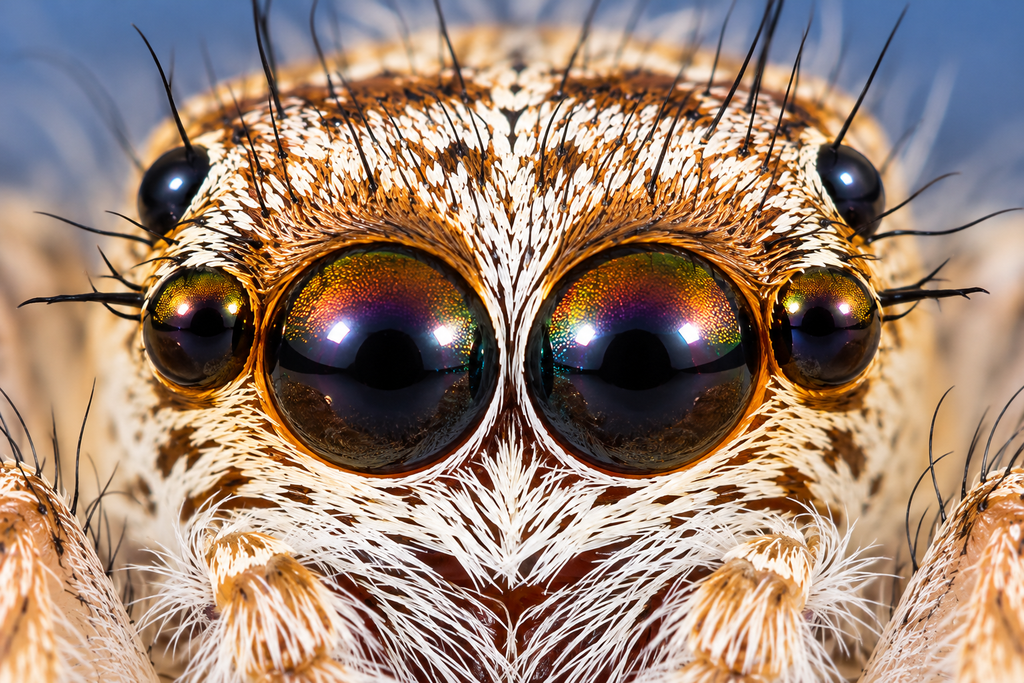
Jumping Spiders of the Sahara are fascinating predators known for their excellent eyesight, remarkable jumping abilities, and unique hunting techniques. The Algerian Sahara is home to a variety of small creatures, including spiders that have adapted to life in challenging desert environments.
Jumping spiders belong to the family Salticidae, one of the largest spider families in the world. They are especially famous for their excellent eyesight, active hunting style, and impressive jumping abilities.
What Is a Jumping Spider?
Jumping spiders are small arachnids recognized by their compact bodies, agile movements, and distinctive forward-facing eyes. Unlike insects, spiders have eight legs and two main body sections.
Their large front eyes give them an expressive appearance and help them examine objects, detect prey, and recognize potential mates.
Scientists have documented numerous jumping spider species in Algeria, including species recorded in Biskra and Touggourt. However, identifying an individual spider to its exact species requires sufficiently detailed photographs or a specialist examination.
Where Do Jumping Spiders Live?
Jumping spiders inhabit a wide range of environments, including grasslands, rocky areas, shrubs, trees, gardens, and dry landscapes. Different species occupy different habitats, depending on their ecological needs.
In desert environments, suitable hiding places can include stones, cracks, dry vegetation, and sheltered surfaces. These places may provide protection from predators and extreme environmental conditions.
The Sahara contains diverse microhabitats, and its small wildlife is adapted to life under demanding conditions. The exact habitat preferences of an individual jumping spider depend on its species.
What Do Jumping Spiders Eat?
Jumping spiders are active predators. Their diet commonly includes small insects and other tiny arthropods.
Depending on their size and species, they may hunt flies, mosquitoes, small moths, ants, and other spiders.
Rather than relying on a sticky web to catch prey, most jumping spiders use their eyesight to locate a target. They approach carefully, judge the distance, and leap onto their prey when the moment is right.
After capturing prey, the spider uses its mouthparts and digestive fluids to consume the animal’s soft tissues.
This hunting strategy makes jumping spiders useful predators in many ecosystems, where they help regulate populations of small invertebrates.
Why Are Their Eyes So Special?
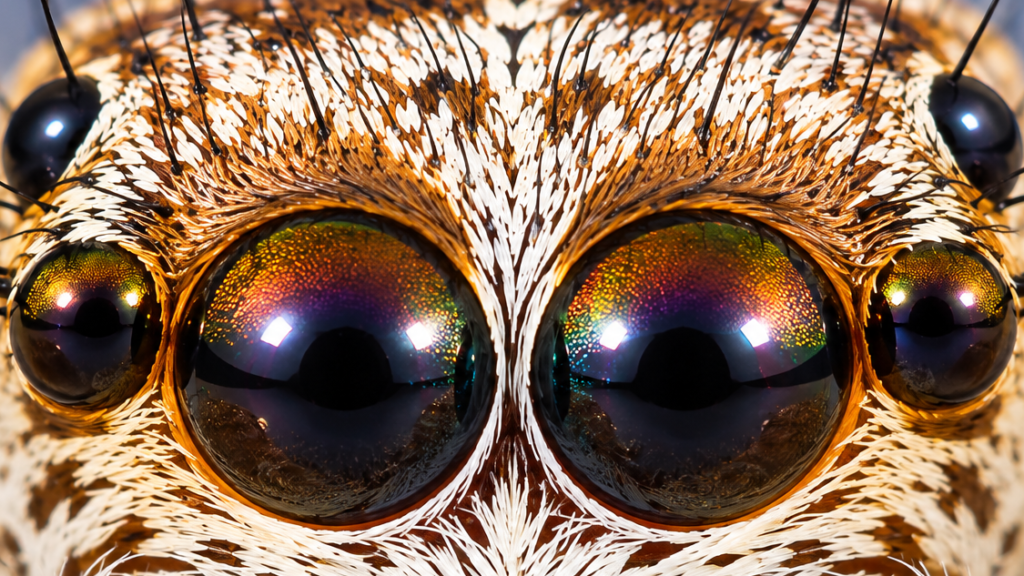
One of the most remarkable features of jumping spiders is their vision.
They have four pairs of eyes, with the large central pair at the front providing particularly detailed vision. The other eyes help detect movement and expand their field of view.
Jumping spiders use their eyesight to locate prey, navigate their surroundings, and respond to other spiders.
Their visual abilities are also important during courtship. Males of many species perform carefully coordinated movements that allow females to recognize and evaluate potential mates.
These adaptations make jumping spiders some of the most visually capable hunters among spiders.
How Do Jumping Spiders Jump?
Jumping spiders can make rapid, controlled leaps to capture prey or escape danger.
Before a jump, a spider often attaches a silk safety line to the surface beneath it. This line can help prevent a dangerous fall if the jump fails.
Their ability to judge distances accurately is closely connected to their excellent eyesight.
Unlike animals that depend mainly on speed or traps, jumping spiders combine visual information, careful movement, and sudden acceleration to catch prey.
How Do Jumping Spiders Mate?
Reproduction in jumping spiders involves distinctive courtship behaviour.
When a male encounters a female, he may move his front legs, change his body position, or perform a visual display. These movements differ between species and help communicate that he is a potential mate rather than prey or a threat.
If the female accepts the male, mating can take place. The male transfers sperm using specialized structures on his pedipalps.
After mating, the female lays eggs inside a protective silk retreat or egg sac. In many species, she guards the eggs while they develop.
When the eggs hatch, the young spiders eventually leave their shelter and begin hunting small prey themselves. The details of courtship, egg production, and parental care vary among species.
How Do Jumping Spiders Survive in Hot Environments?
Life in arid environments presents several challenges, including high temperatures, limited moisture, and changing food availability.
Small spiders can use sheltered spaces to avoid direct sunlight and reduce exposure to harsh conditions. Their behaviour and activity patterns help them make use of suitable periods for hunting.
However, not all jumping spiders share the same adaptations. Their ability to tolerate heat and dry conditions depends on their species and the local environment.
Are Jumping Spiders Dangerous to Humans?
Jumping spiders are not generally considered dangerous to humans. They are small hunters that normally focus on tiny prey and tend to avoid larger animals.
Like other spiders, they may bite if handled or trapped against the skin, but bites are uncommon. It is best to observe wild spiders without touching or disturbing them.
Their ecological role as predators makes them an interesting part of the natural world
Discover the Hidden Wildlife of the Sahara
A close-up photograph can reveal details that are difficult to notice with the naked eye. The eyes, fine hairs, and body structure of a tiny spider offer a glimpse into the complexity of desert wildlife.
Exploring the Sahara means looking beyond its vast dunes and discovering the small animals that survive among its rocks, sand, and vegetation.
At Explore Sahara, we document the wildlife and natural wonders of the Algerian desert, bringing these often-overlooked creatures closer to curious nature lovers around the world.
Leave a Reply